
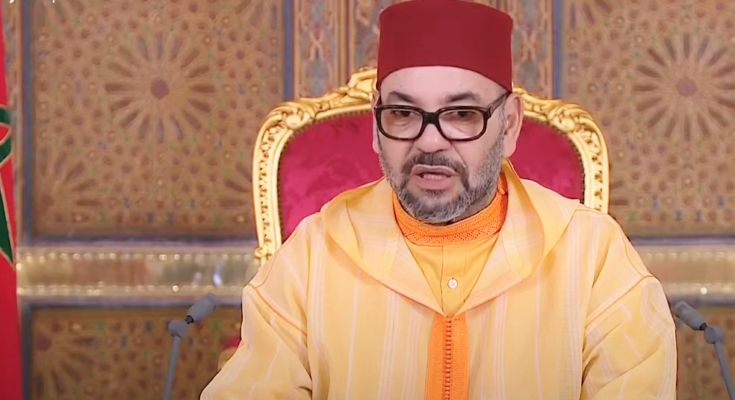
Under HM the King’s Leadership, Morocco Raised Integrity to Strategic Choice & Key Pillar of Its Development Project – Head of Anti-Corruption Authority

Doha – Under the leadership of His Majesty King Mohammed VI, Morocco has raised integrity to a strategic choice and a key pillar of its development project, said, on Monday in Doha, the president of the National Authority for Probity, Prevention, and the Fight against Corruption (INPPLC), Mohamed Benalilou.
In an address read on behalf of the Kingdom during the 11th Conference of the States Parties to the United Nations Convention against Corruption, held in Doha on December 15-19, Benalilou underlined that integrity is fundamental to establishing trust, while being a prerequisite for the efficiency of public policies and guaranteeing a fair access to rights and services, and a fundamental pillar to establish the rule of law and institutions. He emphasized that the deep constitutional and institutional reforms undertaken by Morocco allowed it to implement a complete national system of prevention and the fight against corruption, adding that this system led to the establishment of public policies and structural projects aiming to inscribe integrity and responsibility as a permanent national choice, guaranteeing thus the durability of the country’s process in terms of democracy, development and human rights. The INPPLC head also stressed that the Kingdom’s full commitment to the international momentum to combat corruption is reflected in the completion of all phases of the evaluation of the implementation of the United Nations Convention against Corruption, as well as in the commitment to publish evaluation reports. This places Morocco among the countries that have chosen transparent and public implementation as a criterion for the credibility of their international engagement. Benalilou added that the Kingdom’s active participation in various international anti-corruption networks and mechanisms demonstrates a reform-oriented will and a deep conviction that the fight against corruption can only achieve its objectives within a framework of solidary and collaborative international cooperation, based on the exchange of expertise and the pooling of efforts. At the national level, Benalilou, who is leading the Moroccan delegation participating in the conference, explained that this international engagement constitutes a fundamental reference point for the development of the National Anti-Corruption Strategy, which was drafted through a broad participatory approach involving State institutions, civil society and the private sector. He noted that the Kingdom is preparing to launch a second strategy, reflecting its institutional maturity and a transition toward a new generation of reforms focused on impact and results. Benalilou noted that the Kingdom’s criminal policy is also grounded in United Nations references, by aligning the national legislative framework with the requirements of the Convention and strengthening criminal investigation capacities through the adoption of specialized investigative mechanisms, thereby enhancing the effectiveness of detecting corruption-related offenses and prosecuting their perpetrators. On the preventive front, the INPPLC president affirmed that improving transparency and the quality of public services is a cornerstone of the national integrity approach. He highlighted the importance of public-private joint initiatives, reforming the public procurement system and improving the business climate as strategic tools to reduce potential corruption risks and establish high integrity standards in strategic sectors. In light of the redefinition of corruption risk mappings resulting from digitalization, artificial intelligence and the complexity of cross-border chains, Benalilou called for a paradigm shift in the international approach to combating corruption. This shift, he maintained, should be based on three interdependent pillars: enshrining prevention as the foundation of public policies; developing rigorous and objective evaluation systems to support public decision-making and strategic planning; and taking into account emerging risks linked to technological transformation, so that artificial intelligence does not become a tool for creating new forms of corruption. He emphasized that the fight against corruption is not merely a technical or legal issue to be addressed within national borders, but rather a humanitarian struggle for dignity, rights and sustainable development. He highlighted the close link between corruption and human rights, as well as development, environmental and climate challenges, and stressed the importance of coordination and integration among United Nations processes, particularly those of Vienna, Geneva and New York, in order to enhance the effectiveness of the collective international effort to combat corruption.