
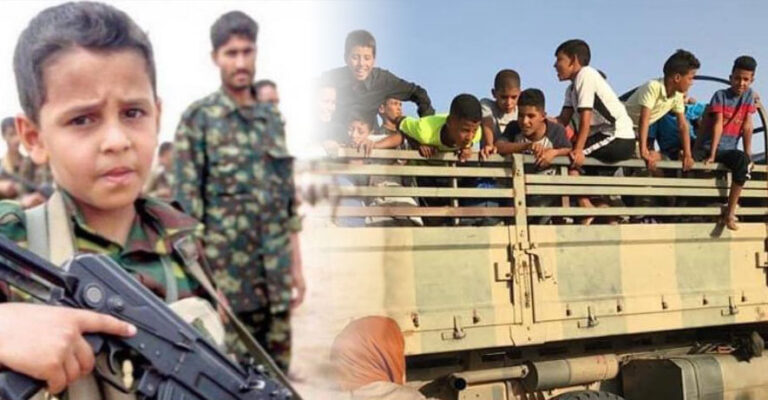
UN: Petitioners Denounce Recruitment of Children by “polisario,” Lack of Prospects in Tindouf Camps

United Nations (New York) – Several petitioners denounced at United Nations Headquarters in New York the recruitment and indoctrination of children in the Tindouf camps, controlled by “polisario” militias, while sounding the alarm over the lack of prospects for young people in the camps and the resulting risks of exploitation and radicalization.
Addressing the Fourth Committee of the UN General Assembly, Sherry Erb, of Oasis Ministries, recalled that the issue of child recruitment and militarization in the Tindouf camps has been raised repeatedly within UN bodies and by international NGOs.
In this regard, she cited a Washington Post investigation published in April 2025, which revealed that “hundreds of ‘polisario’ members and child soldiers had been captured by the new Syrian authorities following the collapse of Bashar al-Assad’s regime.”
Several of those apprehended came from the Tindouf camps, she noted, stressing that this demonstrates “how decades of radicalization have produced significant instability.”
In this context, the speaker referred to the case of Adnan Abu Walid al-Sahraoui, “once a child soldier trained in the Tindouf camps — who later became the leader of ISIS in the Greater Sahara.”
“His trajectory from indoctrinated youth to terrorist commander illustrates the dangerous consequences of militarizing children,” the petitioner noted.
Erb also drew the Committee’s attention to the deteriorating living conditions in the camps, exacerbated by insecurity, criminal activity, and the lack of economic opportunities, a situation that particularly affects younger generations.
For her part, Joyce Flynn of Safety and Security Instructional Services emphasized that Sahrawi children have grown up for decades in an environment marked by isolation, restrictions on movement, and uncertainty about their future.
Drawing on analyses by independent humanitarian organizations, the petitioner underlined that the education system in the camps suffers from multiple shortcomings, further deepening the lack of educational and professional opportunities and undermining the prospects for the development and fulfillment of younger generations.
She stressed that stability, personal development, and the conditions necessary for quality education cannot exist under the rule of the “polisario” armed group.
Nancy Huff of Teach the Children International referred to longstanding concerns regarding the ideological indoctrination of young people in the Tindouf camps, recalling testimonies describing the transfer of children abroad and their exposure to military-style training.
Noting that life in the camps is characterized by “strict ideological control,” Huff said that “Sahrawi families recount children taken from their homes and sent to Cuba for ‘education,’ where they labored in fields, attended school, and received military training, including instruction in explosives.”
“Inside the camps, she continued, dissent was punished, and generations of children were indoctrinated with violent anti-Moroccan rhetoric.”
The petitioner also stressed that the absence of a comprehensive census of the camp population continues to hamper humanitarian planning and assistance efforts, increasing the vulnerability of young people and limiting their development prospects.